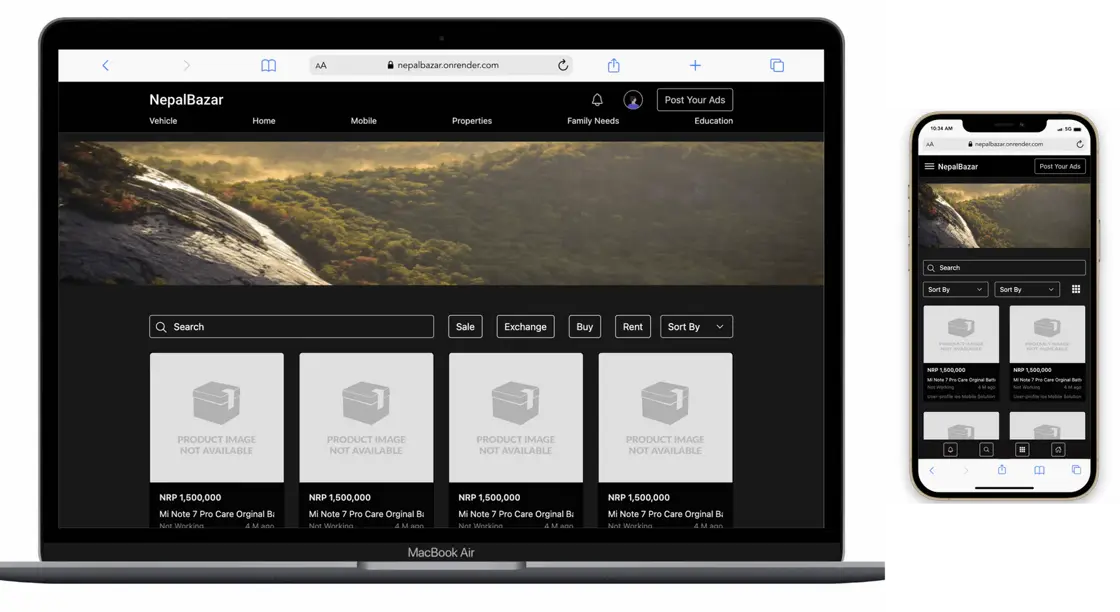
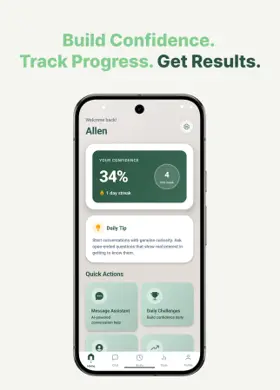
Custom business systems
Inventory, booking, billing, HR: software shaped precisely around how your organisation works.
The mountains endure because their foundations run deep. We build custom software in Nepal the same way, engineering systems your business can stand on for years: APIs, dashboards, internal tools, and platforms ready for the day your ambitions get bigger.
Off-the-shelf software makes you work its way. Custom software works yours. Whether it’s a booking system shaped around how your team actually operates, a dashboard that finally shows all your numbers in one place, or the backend for a product serving thousands of users, we design and build it clean, documented, and ready to grow.
As a software company in Nepal with our own products in production, serving real users with real uptime and real stakes, we engineer for the long trail: secure by default, tested before launch, and maintainable by whoever comes after us, not just by us.
What We Deliver
Inventory, booking, billing, HR: software shaped precisely around how your organisation works.
Robust, documented APIs that power your apps and connect your services, built to handle growth.
Every number that matters, in one clear view, with the controls your team needs to act on it.
Full commerce systems with catalogues, payments, and order management, like our NepaliNest platform.
Making your existing tools finally talk to each other: payments, accounting, messaging, and more.
Monitoring, security updates, and performance work that keeps your software strong as usage climbs.
Why The Brilliant Ideas
We run our own platforms with real users. We know what 2 a.m. reliability actually requires, and we build for it.
Clean code, documentation, and sensible architecture, so your software is never held hostage by its own complexity, or by us.
Authentication, data protection, and careful handling of what your users trust you with, from the first commit.
Design, frontend, backend, and infrastructure under one roof. No coordination gaps for problems to hide in.
How It Runs · हाम्रो बाटो
We sit with the people who will use the thing and watch how the work happens now, including the spreadsheet nobody mentioned. This is where most of the real requirements live.
A written spec you can read without being technical, plus the data model and architecture decisions. Cheaper to argue with a document than with a codebase.
The narrowest slice that is genuinely useful, in production, with real users. Everything after that is informed by how people actually behave rather than how we predicted they would.
Working software you can log into every fortnight. Priorities get reordered as reality arrives, which it always does.
Security review, load testing, backups tested by actually restoring them, monitoring, and alerting. The unglamorous work that decides whether the system survives its second year.
Documentation, a trained admin on your side, and every credential in your name. Then a maintenance plan if you want one, and a clean exit if you do not.
Questions · प्रश्नहरू
Custom software is scoped feature by feature, so costs vary widely, but Nepal-based development makes world-class engineering remarkably accessible. We quote transparently after understanding your workflow, with no surprise line items.
If an existing tool fits 90% of your workflow, buy it, and we will tell you so honestly. Custom makes sense when your process is your advantage, when subscriptions are bleeding you, or when nothing on the market fits how you actually work.
Security is part of the architecture, not an add-on: encrypted data, proper authentication, access controls, and careful API design. We treat your users’ data the way we treat our own products’.
Yes. We audit inherited codebases, stabilise what’s fragile, document what’s mysterious, and then improve from solid ground.
Always. Software is a living thing, so we offer maintenance plans covering monitoring, updates, fixes, and new features as your needs grow.
TypeScript across the stack, with Next.js and React on the front end, Node.js or Python behind it, and PostgreSQL for anything relational. Deployed on managed infrastructure rather than a server nobody remembers how to rebuild. These are deliberately mainstream choices: the point is that you can hire someone else who knows them, which is the real test of a technology decision.
You keep the repository, the documentation, the infrastructure accounts, and the credentials, because they were yours throughout. We write a handover document and we will brief the incoming team. Any agency that cannot answer this question comfortably is describing a dependency rather than a partnership.
Openly, and with a number attached before anything is built. Requirements genuinely change as people see the software working, and pretending otherwise is how projects go wrong. What we will not do is absorb changes silently and then present a surprise invoice, or build something we know is wrong because it was in the original document.
Usually, yes. Payment gateways, accounting packages, inventory systems, SMS gateways, and CRMs are routine work. The honest caveat is that integrations are only as reliable as the API on the other side, and some local systems have none, in which case we are looking at file exchange or screen automation and should say so before quoting.
Tell us where you want to go, and we’ll map the route, free of charge.
Talk to Us