What a website actually costs in Nepal.

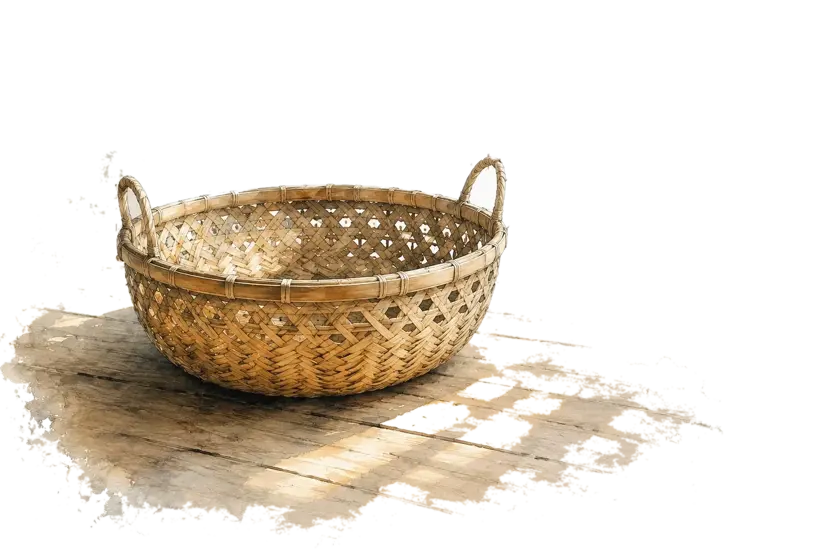
A doko holds exactly as much as the weaving allows. You can see, before anything is loaded into it, whether it was made to carry a harvest or to look reasonable in a shop window. Websites are priced the same way and judged the same way, and the difference is almost never visible in the quote.

The Brilliant Ideas11 min read
A watercolour of a craftsman weaving a bamboo doko basket, the load it will carry already decided by how tightly each strand is placed

This page exists because the honest answer to “how much does a website cost in Nepal” is a range, and almost nobody in this market will give you one before a meeting. Here is ours, along with the reasoning, so you can walk into any conversation knowing whether you are being quoted fairly.

Why nobody publishes prices

Three reasons, two of them legitimate. The first is that scope genuinely varies by an order of magnitude: “a website” covers a five-page brochure site and a booking platform with payments and inventory. The second is that agencies price partly on the client, and publishing a number removes that flexibility. The third is that a vague quote is easier to inflate later through change requests.

The first reason is real, so what follows is banded by project type rather than given as a single figure. The other two are why we would rather tell you up front and lose the enquiries where we are the wrong fit.

What actually drives the number

Almost all of the variance in a web project quote comes from six things. Understanding them lets you move the price deliberately instead of negotiating blind.

  • Page count, but only up to a point. Twelve pages that share three templates cost barely more than eight. Twelve pages that each need their own layout cost roughly twelve times one.
  • Whether the design is original or adapted. A custom design starts with research, wireframes, and revisions. A well-chosen template skips most of that, and for a great many businesses that is the right trade.
  • Content. Who writes the words and sources the photographs is the single most common cause of both budget overrun and delay. If it is us, that is real work and it belongs on the quote. If it is you, the project needs a date by which it arrives.
  • Integrations. Payments through eSewa, Khalti, or Fonepay, a delivery partner, an accounting system, a CRM, an SMS gateway. Each one is a discrete piece of engineering with its own testing and its own failure modes.
  • Whether anyone logs in. The moment a site has accounts, roles, or a dashboard, it stops being a website and becomes an application. This is the largest single step change in cost on the list.
  • Admin control. A site whose text you can edit yourself costs more to build than one where you email us for changes, and less to own. Which is cheaper depends entirely on how often you change things.

Real ranges, by what you are actually building

These are the bands we see across the Nepali market for work done properly, by a team that will still answer the phone in a year. Prices below these bands exist and sometimes make sense; the section after this one covers what you give up.

What you are buildingTypical range (NPR)Typical timeline
One-page site or campaign landing page25,000 – 60,0001 – 2 weeks
Business site, 5 to 8 pages, template-based50,000 – 120,0002 – 4 weeks
Business site, custom design, CMS-editable120,000 – 350,0004 – 8 weeks
E-commerce, up to ~100 products, local payments200,000 – 600,0006 – 12 weeks
E-commerce, large catalogue or multi-vendor600,000 – 2,000,000+3 – 6 months
Web application, dashboard, or booking platform500,000 – 3,000,000+3 – 9 months
Redesign of an existing site, content retained80,000 – 250,0003 – 6 weeks

Two notes on reading this table. Ranges overlap because a small e-commerce build with two integrations can cost less than a content-heavy corporate site with original photography. And the timeline column is the honest constraint: a project quoted at eight weeks and demanded in three will either cost more or ship worse, and usually both.

The costs that are not on the quote

A website is a subscription pretending to be a purchase. The build is the largest single payment and the smallest share of the ten-year cost. Budget for the following every year, from the first year.

ItemTypical annual cost (NPR)Notes
Domain (.com)1,500 – 2,500Register it in your own name, not the agency’s
Domain (.com.np)FreeRequires documentation through Mercantile
Shared hosting4,000 – 12,000Adequate for a brochure site, not for e-commerce
VPS or managed hosting15,000 – 90,000Needed once traffic or a database is real
SSL certificateFreeLet’s Encrypt. Do not pay for this on a normal site
Maintenance and updates20,000 – 120,000Security patches, backups, plugin updates, small edits
Email hosting3,000 – 15,000 per userGoogle Workspace or Zoho, per mailbox

The maintenance line is the one most often skipped, and skipping it is how a site that cost three lakh becomes unusable in two years. An unpatched content-management install is compromised eventually, not hypothetically, and cleaning up a defaced or blacklisted site costs more than the year of maintenance would have.

Own your own accounts

Register the domain in your business’s name and keep the login. Own the hosting account, the Google Analytics property, the Search Console property, and the Business Profile. Agencies who hold these on your behalf, whether by policy or by accident, are holding the only assets in the project that genuinely appreciate. Any reputable partner will hand them over without being asked twice.

What NPR 15,000 actually buys

You will be offered a website for fifteen or twenty thousand rupees, and it is not a scam. It is a real deliverable with real limits, and for some businesses it is genuinely the correct choice. It is worth knowing precisely what the limits are.

  • A purchased template, applied with minimal changes. Recognisable to anyone who has seen the theme before, which increasingly includes your customers.
  • Your content pasted in, unedited. Whatever you send is what appears.
  • A page-builder plugin stack, which typically means several hundred kilobytes of JavaScript to render text, and a Core Web Vitals assessment that fails on mobile.
  • No structured data, generic titles, and no redirect map, so search visibility starts near zero and stays there.
  • No maintenance, which means the install is unpatched from the month it launches.
  • And, most often, no handover of the domain or hosting credentials.

If you need a presence this month so that a Google search for your business name returns something you control, that is a reasonable purchase. If you expect the site to bring you customers, you are buying the wrong thing, and the rebuild in eighteen months will cost more than doing it once.

How to brief so that quotes are comparable

Most quotes are impossible to compare because each agency has silently assumed a different scope. You can fix that in a single page. Send the same page to everyone.

  1. State what the site is for in one sentence, in terms of an outcome rather than a feature. “Take table bookings without phone calls” is a brief. “A modern, responsive website” is not.
  2. List the pages you believe you need. Being wrong is fine, it gives everyone something concrete to correct.
  3. Say explicitly who is writing the text and who is supplying photographs, and by when.
  4. Name every integration: which payment gateway, which delivery partner, which accounting or inventory system.
  5. Say whether anyone needs to log in, and what they do once they have.
  6. State who will edit the site after launch, and how often.
  7. Give your budget range. Withholding it wastes everybody’s time, and a good agency will tell you what is achievable inside it rather than quietly padding to whatever you eventually reveal.
  8. Ask each quote to itemise design, development, content, integrations, and the first year of hosting and maintenance separately.

If the budget is fixed, spend it in this order

Nearly every project is constrained. When ours are, this is the order we argue for, and it is deliberately unfashionable.

  1. Speed and mobile rendering. Nothing else matters if the page does not load on a mid-range phone on mobile data.
  2. The three or four pages that carry the commercial weight, written properly. A great services page beats nine thin ones.
  3. Working contact routes: a form that actually delivers, a phone number that rings, and a visible address.
  4. Search foundations: titles, descriptions, structured data, sitemap, and the redirect map. These are cheap and permanent.
  5. The ability to edit your own content, so the site does not calcify the week we leave.
  6. Original design, animation, and photography. This is genuinely valuable and it is genuinely the thing to defer, because it is the only item on the list you can add later without rebuilding anything.

Questions· प्रश्नहरू

Asked around the campfire

How much does a simple business website cost in Nepal?

For a five to eight page site built on a well-chosen template, with your content placed properly and search foundations in place, expect NPR 50,000 to 120,000. A custom-designed version of the same site, with a CMS you can edit yourself, generally runs NPR 120,000 to 350,000.

Why do quotes for the same website vary so much?

Almost always because the quotes are for different things. One assumes you supply all text and photographs, another includes copywriting and a shoot. One uses a template, another designs from scratch. One includes a year of maintenance, another does not. Ask every bidder to itemise design, development, content, integrations, and first-year hosting and maintenance separately, and the variance usually explains itself.

Is WordPress cheaper than a custom-built site?

Cheaper to build, often more expensive to own. WordPress gets you to launch faster and lets you hire from a much larger pool, which is a real advantage. It also needs continuous patching, and page-builder plugin stacks are the most common cause of the slow, bloated sites we are asked to rescue. For content-led sites it is frequently the right answer. For anything with accounts, transactions, or performance requirements, it usually is not.

What are the yearly running costs after launch?

Budget NPR 30,000 to 150,000 a year for a normal business site: domain, hosting, email, and maintenance. E-commerce sits higher because it needs real hosting and its payment integrations need testing whenever a gateway changes. The maintenance line is the one people cut, and it is the one that turns a working site into a rebuild.

Should I pay in instalments?

Yes, and any established agency will expect to. A typical structure is a third to begin, a third at design sign-off, and the balance at launch. Be wary of full payment up front, and equally wary of an agency willing to build everything before invoicing, because neither arrangement tends to end well for the party taking the risk.

A fair price starts with a straight answer.Tell us what you need, and we’ll cost it honestly.

Tell us where you want to go, and we’ll map the route, free of charge.

Talk to Us